Virtual Reality Courtroom
An immersive VR experience that helps victims of violence prepare for courtroom proceedings, with a facilitator-controlled drama manager and OpenXR hand interaction.
- Unity
- C#
- OpenXR
- VR
My role
Built on the Statum team's foundation: the Courtroom Drama Manager (LookAt / SpeakLine / Chained events defined in JSON, with synchronized lip movement and gestures), the facilitator control GUI, and responsive OpenXR hand interaction validated on Oculus, Vive, and Varjo.
Outcome
The technology behind a published clinical case study (Psychology, Crime & Law, 2024): five VR exposure-therapy sessions helped a survivor of sexual violence prepare for a real court hearing. Part of an ongoing Reykjavík University Psychology × Computer Science collaboration.
Navigating the legal system after experiencing a violent crime can be overwhelming and emotionally taxing. Recounting traumatic events, answering probing questions, and potentially facing the perpetrator is daunting.
The VR Courtroom is designed to ease that process. This immersive experience prepares victims for courtroom proceedings, letting them familiarize themselves with what to expect in a controlled environment. Therapists can use it to introduce patients to the courtroom gradually, keeping them in control and minimizing adverse psychological reactions — building the resilience and confidence to seek justice.
Origins
The project began with a group of university students who later founded a startup, Statum. Since 2019 it has been developed in partnership with Reykjavik University’s Psychology and Computer Science departments. My contributions build on that strong foundation, working toward meaningful improvements to the experience.
The platform went on to underpin a published clinical case study (Psychology, Crime & Law, 2024), in which a survivor of sexual violence completed five VR exposure-therapy sessions ahead of a real court hearing and reported a greater sense of control over her emotions and reactions. I built and extended the technology; the clinical research itself was led by Reykjavík University’s Psychology department.
Key features
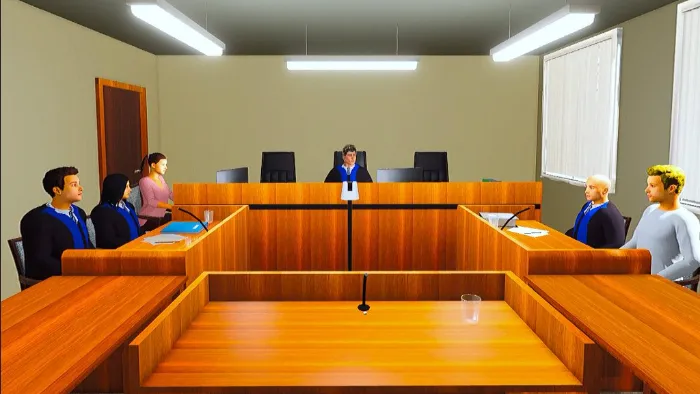
Authentic virtual characters. The courtroom is populated by six detailed characters — the victim’s lawyer, prosecutor, note taker, judge, defence lawyer, and perpetrator. Each behaves like its real-life counterpart (looking around, blinking), can focus on specific targets, and converses with synchronized lip movement and gestures.
Dynamic Courtroom Drama Manager. The therapist orchestrates custom scenarios — directing attention with a LookAt event, triggering dialogue with a SpeakLine event, and building interconnected sequences with a Chained event. Scenarios are defined in a simple JSON configuration.
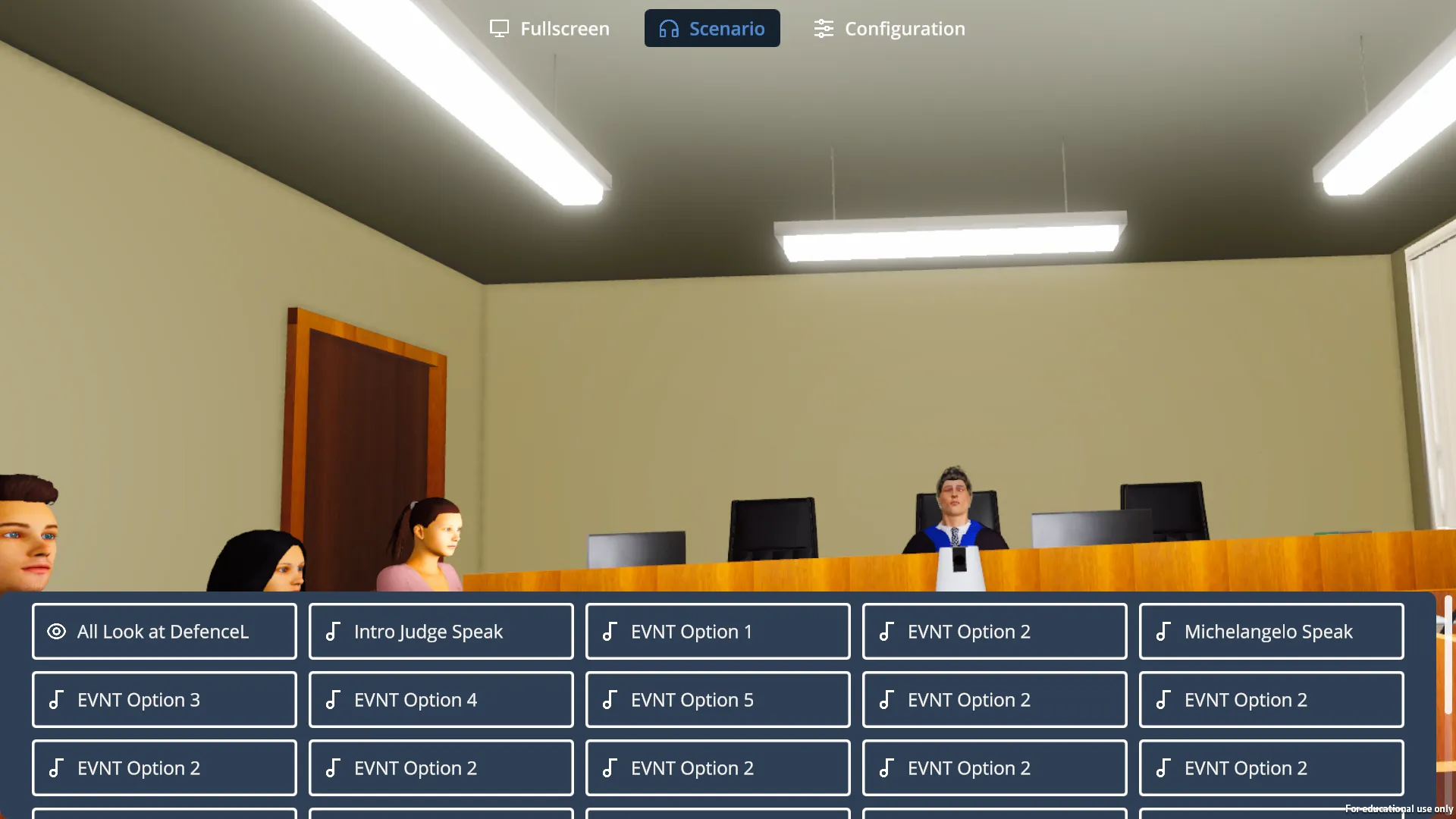
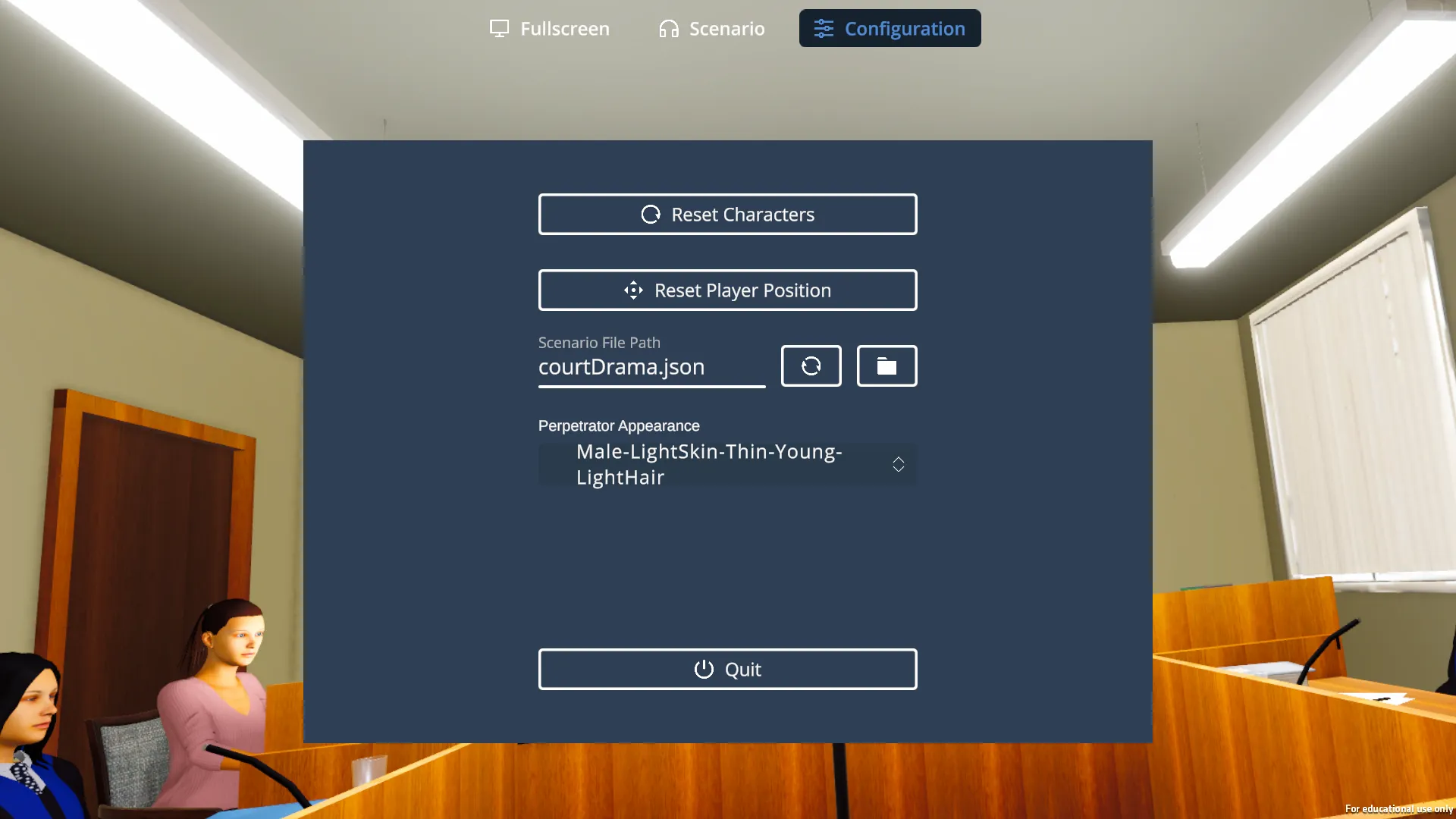
Intuitive controller interface. A dedicated GUI, hidden from the participant, gives the facilitator a real-time view of the VR experience, direct access to the drama manager, and configuration tools — including adjusting the perpetrator’s appearance to tailor each session.
Responsive hand interaction via OpenXR. Interactive 3D hands mirror controller movement in real time, letting participants engage with objects on a virtual desk. OpenXR integration keeps it broadly compatible — validated on Oculus, Vive, and Varjo.
Want something built like this? I'm available for contract work.