Virtual Reality Air Traffic Controller
A VR air-traffic-control simulation, modelled on ISAVIA's Reykjavik Control Area, for researching how external factors affect performance on mission-critical tasks.
- Unity
- C#
- Oculus SDK
- Hand Tracking
- VR
My role
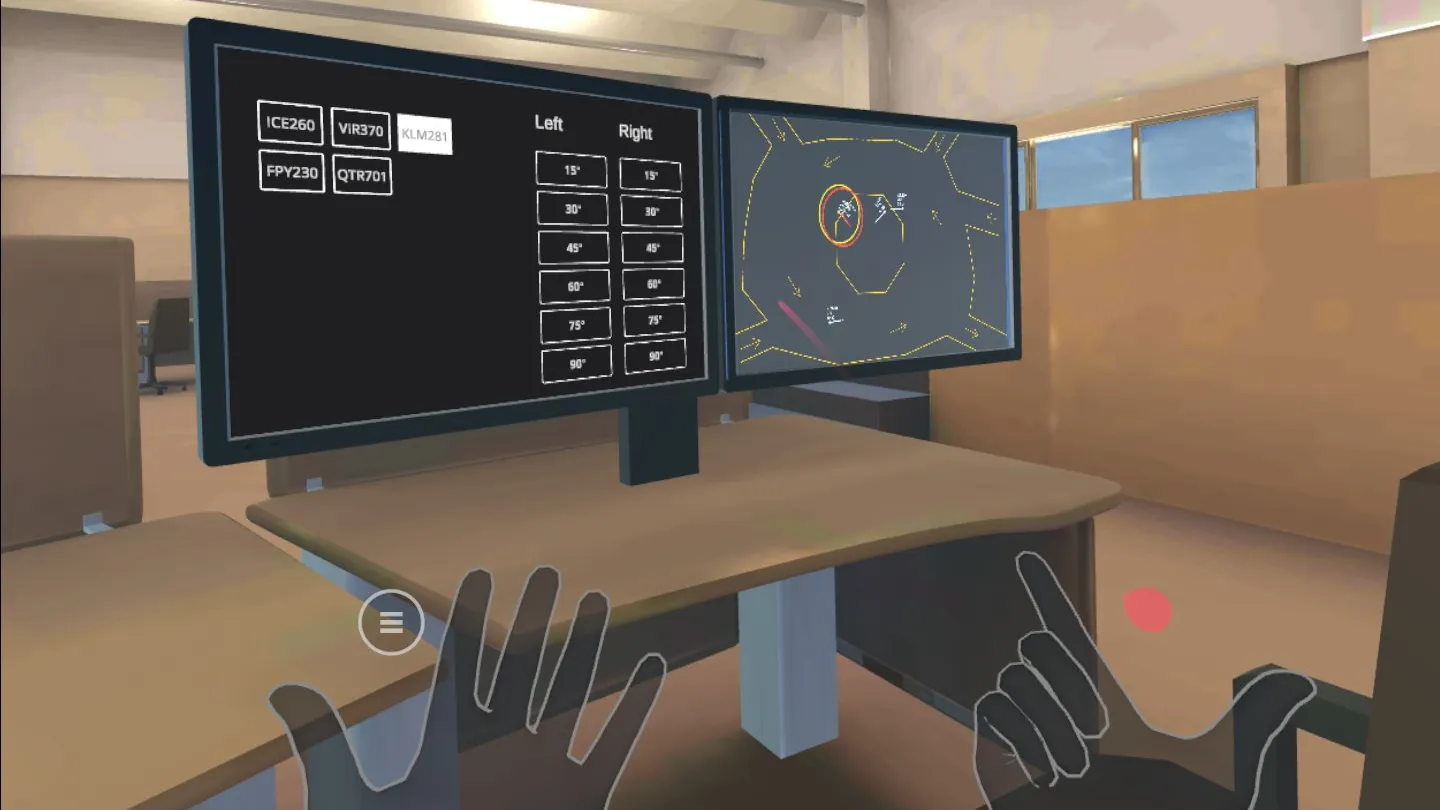
Extended Emil Þór Emilsson's original ISAVIA VR simulation: redesigned the interface for VR, added Oculus hand-tracking (pinch interaction), rebuilt the hard-coded simulation logic into a dynamic scenario system, and added performance-metrics capture plus a survey-API integration for a real data-collection experiment.
Outcome
A research instrument for studying how external factors influence mission-critical task performance.
The North Atlantic is a hub of air traffic, with ISAVIA at the heart of it. Entrusted by the International Civil Aviation Organisation to manage the Reykjavik Control Area, ISAVIA ensures safe passage for over a quarter of all aircraft crossing the North Atlantic — a vast region relying on a network of seven radar stations.
Objective
The project explores how external factors influence performance on mission-critical tasks like air-traffic control. Human controllers direct aircraft, avert collisions, and ensure smooth navigation — so precise control systems, and an understanding of what degrades them, matter.
What I built
Building on Emil Þór Emilsson’s original Oculus experience, I added:
- Adapted VR interface — tailored from real ATC systems specifically for the VR experience.
- Hand tracking — integrated the Oculus Interaction SDK to remove joysticks; users interact with pinch mechanics.
- Simulation-logic overhaul — replaced the hard-coded GUI with a dynamic system that adjusts to a broad range of scenarios.
- Performance metrics — capture of maneuver requests, proximity warnings, and other events for evaluating task performance.
- Survey integration — an external API to a custom survey platform, designed to run an experiment correlating participants’ feedback with in-simulation data.
Interaction
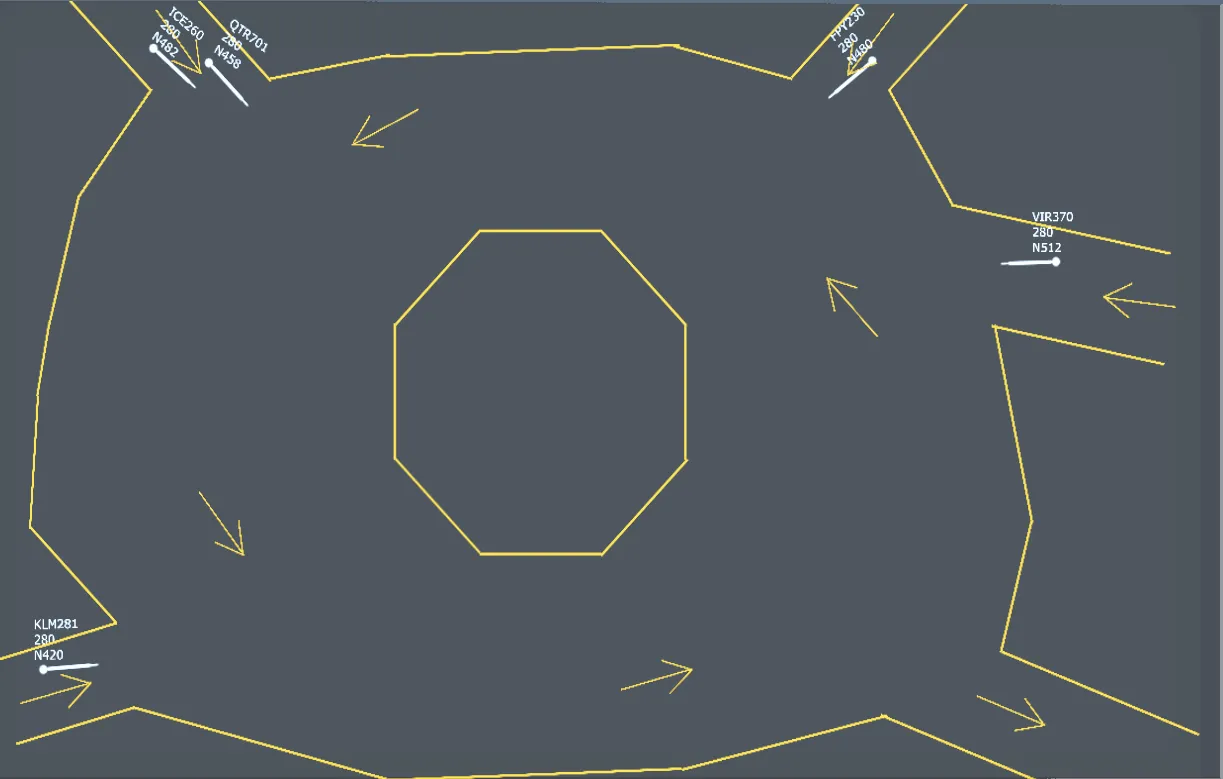
Users face two monitors in the VR environment. The right monitor shows a top-down view of moving aircraft and their flight paths; the task is to guide each safely to its exit point.
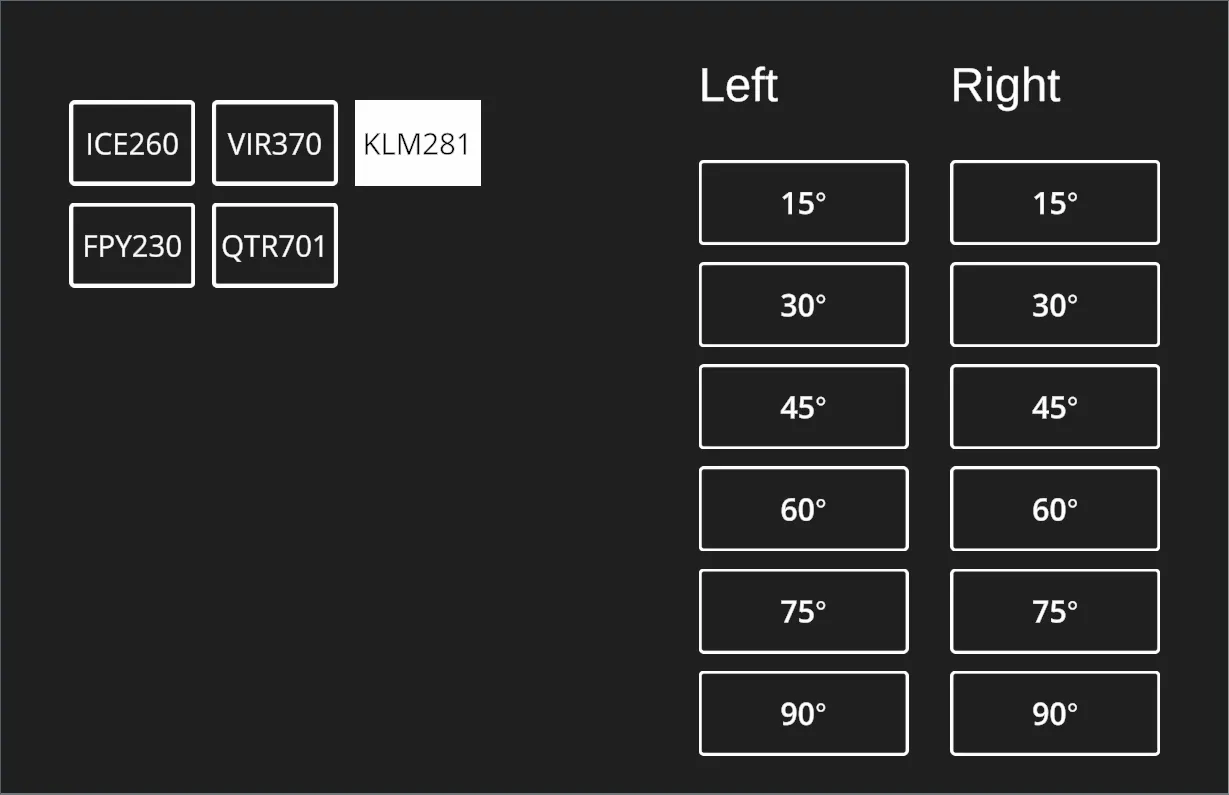
The left monitor is a selection and control panel — pick an aircraft, issue adjustment commands, and watch the effect play out on the right. The session ends when all aircraft have safely reached their exit points.
The result is a more authentic, intuitive, and flexible experience — pairing realistic simulation with detailed performance metrics to study how external factors shape mission-critical work.
Want something built like this? I'm available for contract work.